7.5/10
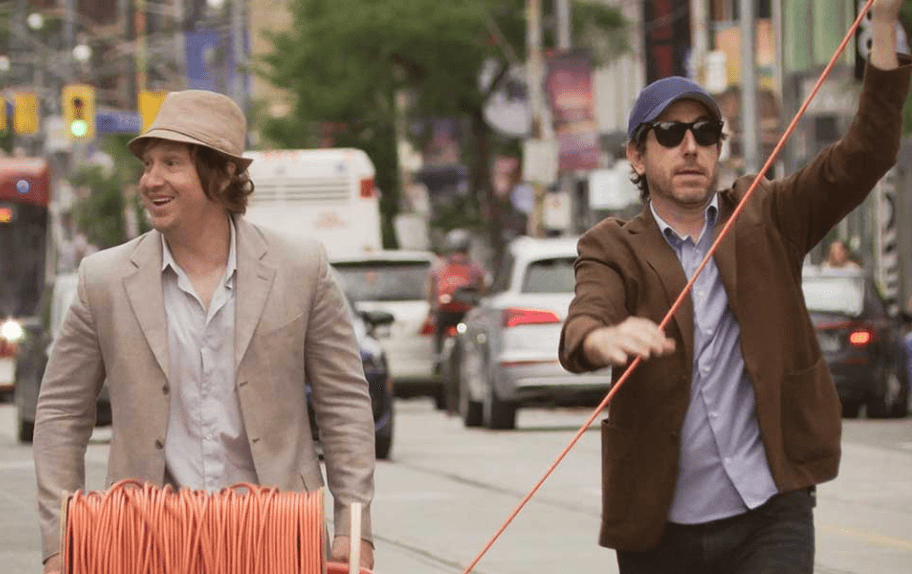
I feel like its a sacrilege against Toronto for me to say that I wasn’t a huge fan of this film. Not that I think the film is bad (it isn’t), just to say that I think the reviews hailing Johnson and McCarroll as the Chaplins of Torontoian comedy is a bit generous.
To start with what I enjoyed about the film, I loved how it’s unapologetically Torontonian. Often films made in Canada try as hard has humanly possible to avoid saying or doing anything that makes the story a uniquely Canadian one, rather one that’s broadly applicable to any Canadian or American town. I also though the film use of editing during the mid-section of the film was incredibly clever and well done. This is a hard film to talk about without spoiling it, but for those who have seen it you will know there is a twenty minute chunk of the film that has an almost seamless blend of decade old footage and modern reshoots. The entire sequence rests on the edit feeling coherent and believable, and it certainly delivers on that front.
Going into Nirvanna, my main gripe with Johnson’s films as a whole (with the exception of Blackberry) exude this millennial edgelord comedic style that becomes more and more obnoxious the older he gets and the more the world changes. The film manages to overcome this for most of its runtime, but occasionally slips back into that comedic style. Those who have seen it will know that the film comes up with an incredibly convoluted way for the two to make out-dated jokes which didn’t really land, and seem to really only exist as a subtle complaint about how the current day is too “PC”. The film’s (for lack of a better term) aging incel energy is also not helped by the fact that there are basically zero women in the film, only appearing as background characters or as street interviews.
However, when Johnson and McCarroll do write a salient joke, damn are they good. The first 20 minutes of the film were genuinely some of the funniest of any I’ve seen in recent years. It reminded me of a lot of other comedians whose work I enjoy, Nathan Fielder in particular but there also is a Larry David-esque strain through a lot of the film’s comedy. The crowd work is great and watching it feels like exposure therapy for social anxiety.
There are also a number of pretty solid themes that go mainly unspoken but are present throughout the film. At times it feels like a very touching commentary on aging, friendship, and how to deal with being an artist whose work never really took off in the way you envisioned. These emotional threads do keep the film grounded, even with its outrageous story line.
Overall, I have a lot of respect for the directors’ dedication to their work, especially with the insanely difficult filming choices they make throughout the film. I also enjoy it as a piece of unapologetically Torontoian cinema, even if the film’s tone doesn’t always work for me.
Scoring Card:
| Formal Technique: 7.5/10 |
| Story: 6.5/10 |
| Dialogue: 9/10 |
| Performances: 7/10 |
| Overall: 7.5/10 |


Leave a Reply